Press vs. Playlists vs. Social Media vs. Meta Ads: Every Music Marketing Option Compared
The real pros and cons of press, playlists, social media, and Meta ads for music marketing, and which one actually grows a real fanbase.
Every artist hits the same fork in the road eventually: where do you actually put your time and money. Press, playlists, social media, and Meta ads all get pitched as the thing that’s going to grow your career. They all do something. None of them do everything. Here’s the real breakdown for each.
Press
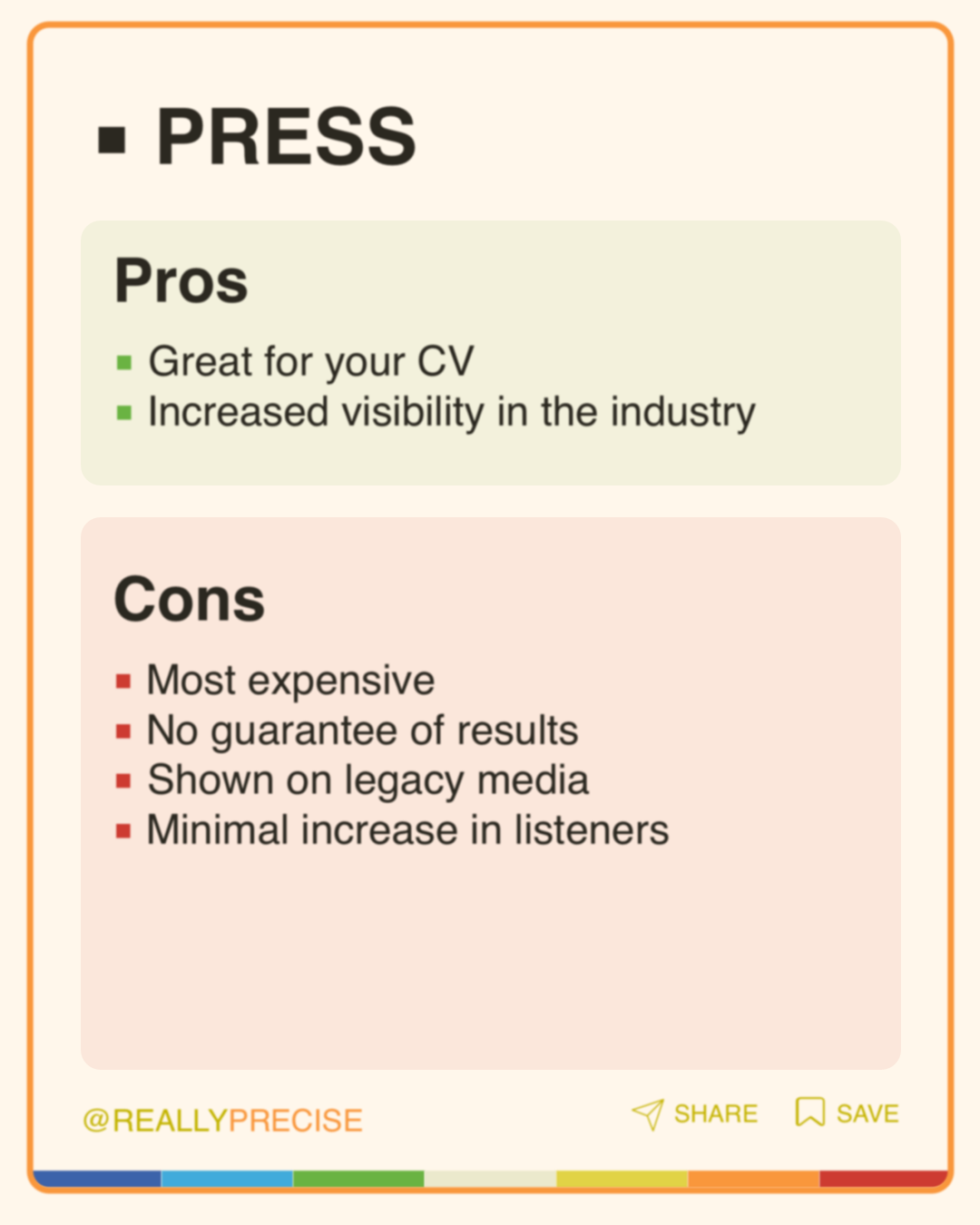
Press is very expensive. It looks great on your CV, but it probably won’t get you many new listeners, especially if it’s just blogs and legacy media, and there’s no guarantee of results either. It’s a better fit for established artists with a real following, or a newer artist who already has some momentum going into it.
Pros
- Great for your CV
- Increased visibility in the industry
Cons
- Most expensive option on this list
- No guarantee of results
- Runs on blogs and legacy media
- Minimal increase in new listeners
Playlists
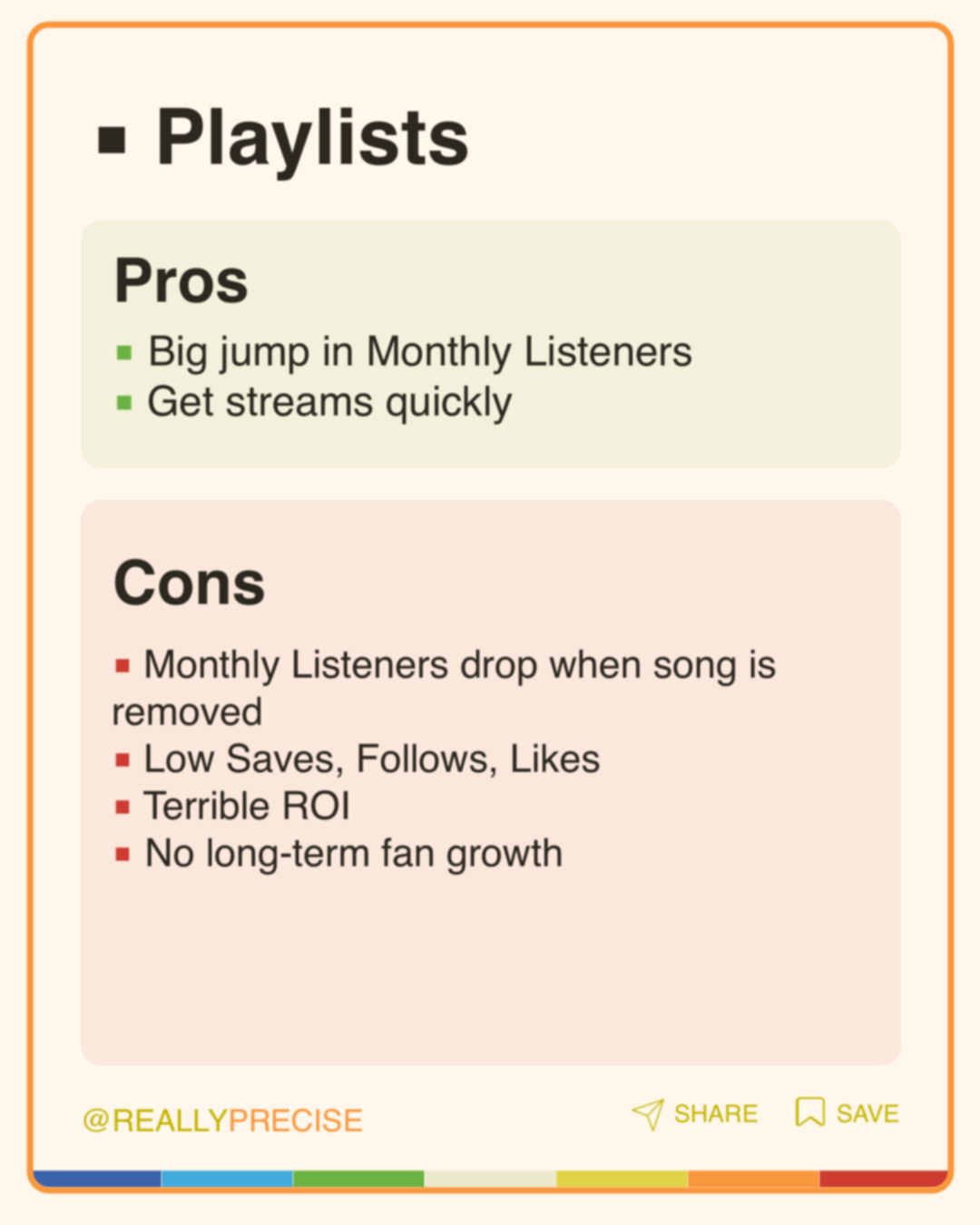
Playlists are the least impactful option on this list. Sure, it’ll pump your streams for a bit, but you’re back to square one the moment your song gets removed. A lot of the popular paid playlists are running bots, or padded with listeners who barely engage with what’s actually playing.
Pros
- Big jump in monthly listeners
- Get streams quickly
Cons
- Listeners drop back down once the song is removed
- Low saves, follows, and likes
- Some placements are running bots or low-engagement listeners
- Terrible ROI, no long term fan growth
Social Media
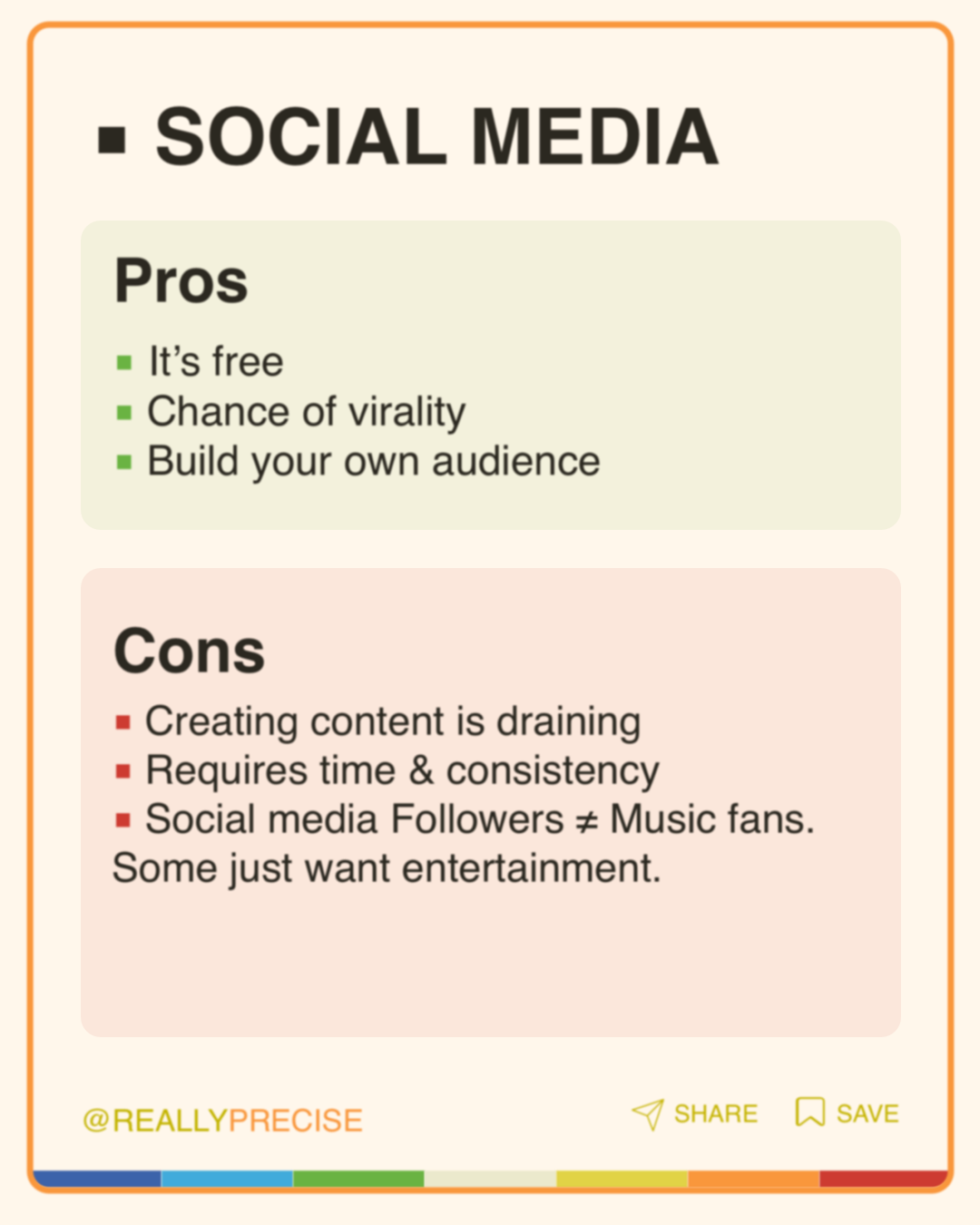
Social media is free, and it can work. But it requires a big time commitment to create content consistently, and not everyone wants to do that. It’s draining, and it takes time away from actually making music.
Pros
- It’s free
- Real chance of virality
- Build your own audience
Cons
- Requires a big time commitment
- Creating content consistently is draining
- Time spent on content is time not spent making music
- Followers aren’t the same as fans. Some people just want to be entertained
Meta Ads
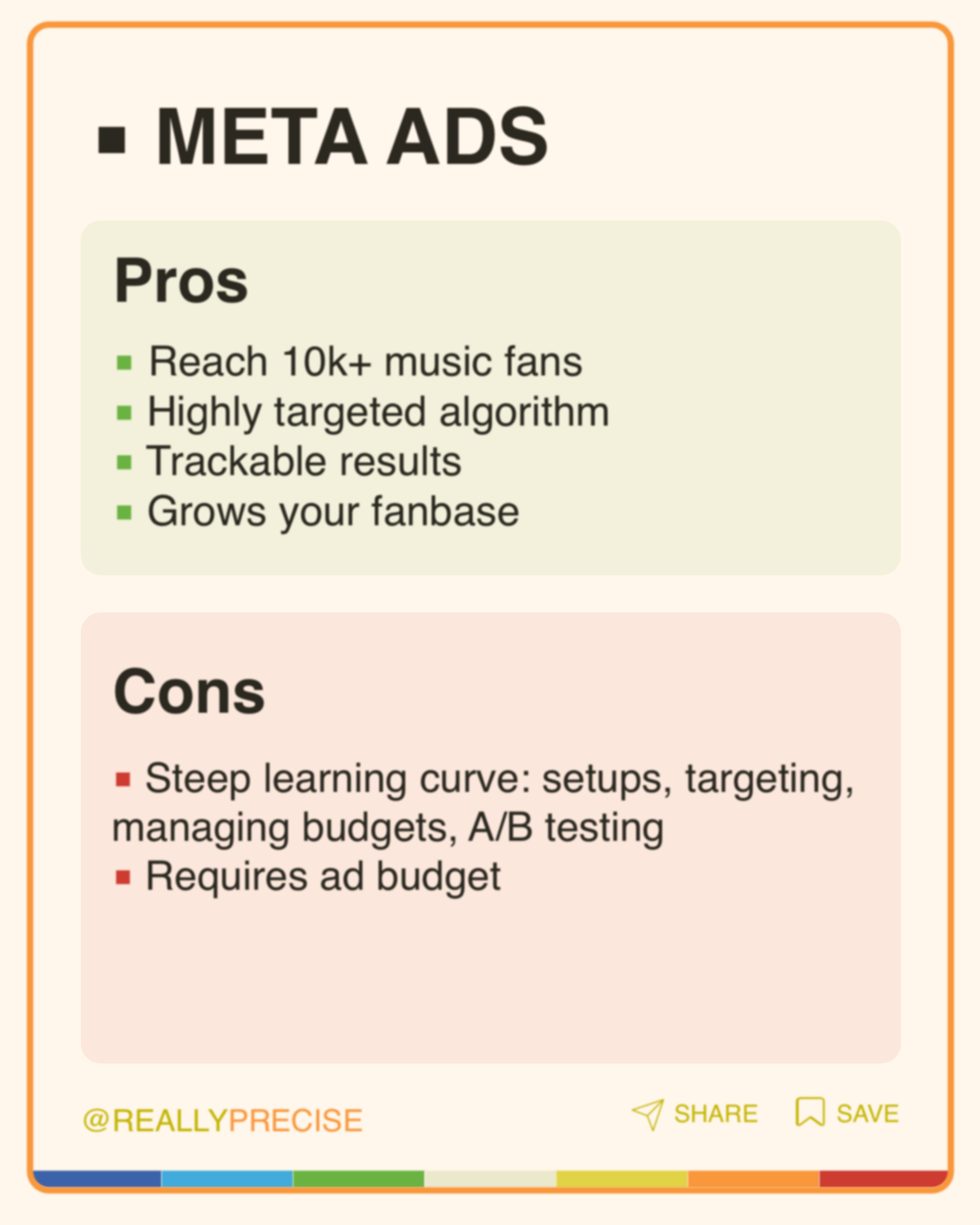
Meta ads are the best overall option, no matter where you are in your career. The algorithm works in your favor and targets thousands of people who are actually interested in your music, and every result is trackable so you know what’s working. There is a steep learning curve though, and hiring the right agency to run it for you can be hit or miss.
Pros
- Reach 10k+ music fans
- Highly targeted algorithm working in your favor
- Trackable results
- Grows a real fanbase, at any stage of your career
Cons
- Steep learning curve: setups, targeting, budgets, A/B testing
- Requires an ad budget
- Hiring the right agency to run it can be hit or miss
So what’s actually worth it
If you’re picking one place to put real investment, Meta ads come out ahead. It takes more work to learn than posting on social or renting a playlist slot, but it’s the option built to get you real fans instead of a number that disappears the second you stop paying.
Key takeaways
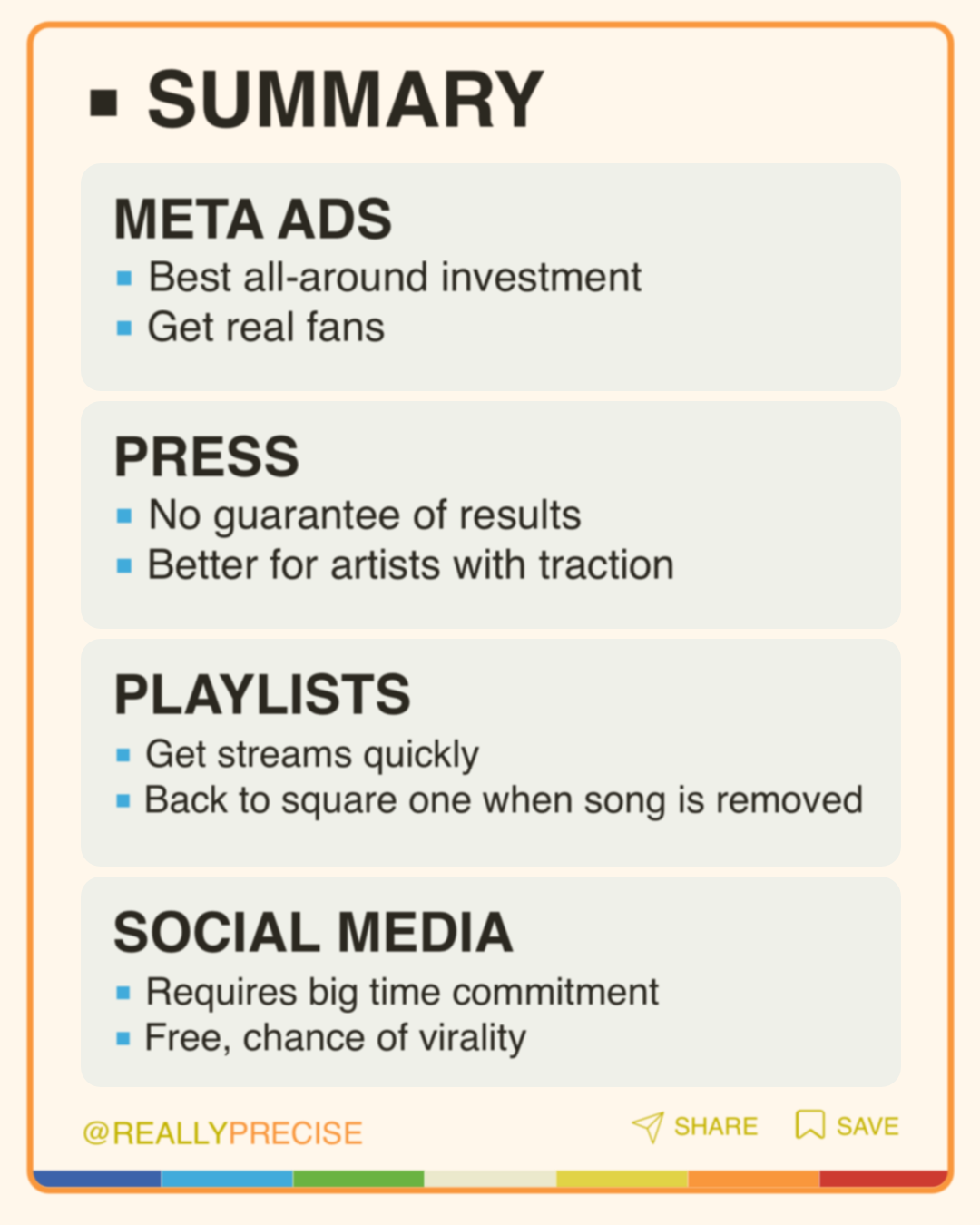
- Meta ads: best overall option at any stage of your career, but there’s a real learning curve
- Press: great for your CV and credibility, but expensive with no guarantee of new listeners
- Playlists: the least impactful option, streams disappear the moment the song comes off
- Social media: free with real upside, but only if you can keep up the time and consistency
None of these are inherently wrong to use. But if your time and money is limited, Meta ads offer the best bang-for-your-buck. Start there, and use your leftover budget for the other channels.
FAQ
Which channel should a brand new artist start with?
If you have zero audience, Meta ads is usually the strongest starting point, since it’s the only one of the four built to put your music in front of people who don’t know you yet but are targeted specifically because they like that kind of music. Social media can work too, but it takes months of consistent output before it produces anything real. Press and playlists both perform better once you already have some traction to point to.
How long should you run a Meta ads campaign before judging it?
Give it real time, not a few days. Meta’s delivery system needs a learning period to find the right audience, so judging a campaign before it’s out of that phase means you’re reacting to noise instead of results. Judge performance in weeks, not days, and measure the outcome in Spotify for Artists (saves, followers, repeat listeners) rather than just the numbers inside the ad platform.
Can a bad playlist placement actually hurt you?
Yes. Spotify’s recommendation system learns who your music is for by watching engagement, and a wave of disengaged, bot-driven, or low-intent listens teaches the algorithm your song is skippable. There’s a financial risk too. Since April 1, 2024, Spotify has charged labels and distributors a per-track fee for flagrant artificial streaming, and that cost gets passed down the chain.
Is press still worth it for an unsigned or new artist?
It can be, as long as the expectations match reality. Press is better suited to building a resume and industry visibility than to finding new listeners, and it does the most good once you already have a story or a following to attach it to. If you’re brand new with nothing built yet, a press push on its own usually underperforms compared to putting the same budget into Meta ads.
Do you need to hire an agency to run Meta ads for music?
Not necessarily, but it changes the tradeoff. Running it yourself means climbing the learning curve on targeting, budgets, and testing with your own money. Hiring an agency skips that curve, but quality varies a lot between agencies, so vet anyone you’re considering the same way you’d vet a playlist curator: ask for real outcomes, not just promises.
Are social media followers the same thing as music fans?
No, and that gap is the biggest hidden cost of relying on social media alone. A meaningful share of anyone’s following is there for entertainment, not because they’re going to stream your next release, which is why follower count on its own is a weak signal of real fan growth. Saves, repeat listens, and playlist adds are better indicators than followers or likes.
What’s the best way to measure whether any of these is actually working?
Look past the platform’s own numbers and into Spotify for Artists. Compare listeners against followers and saves for the same period. If listeners spike but followers and saves barely move, that’s rented attention, not real fan growth, no matter which channel produced the spike.
.jpg)
REALLY PRECISE
What we do
We're one of Canada's leading music marketing agencies. We get your music in front of the right audience. With really precise Facebook/Instagram Ads at indie-friendly prices.